
On Hendersonville Road, a Walgreens sign blinks a familiar message: NOW HIRING PHARMACY TECH.
“I guess they still can’t find anyone,” says Ellen, a resident of Givens Gerber Park. “That sign has been there since I moved in two years ago.”
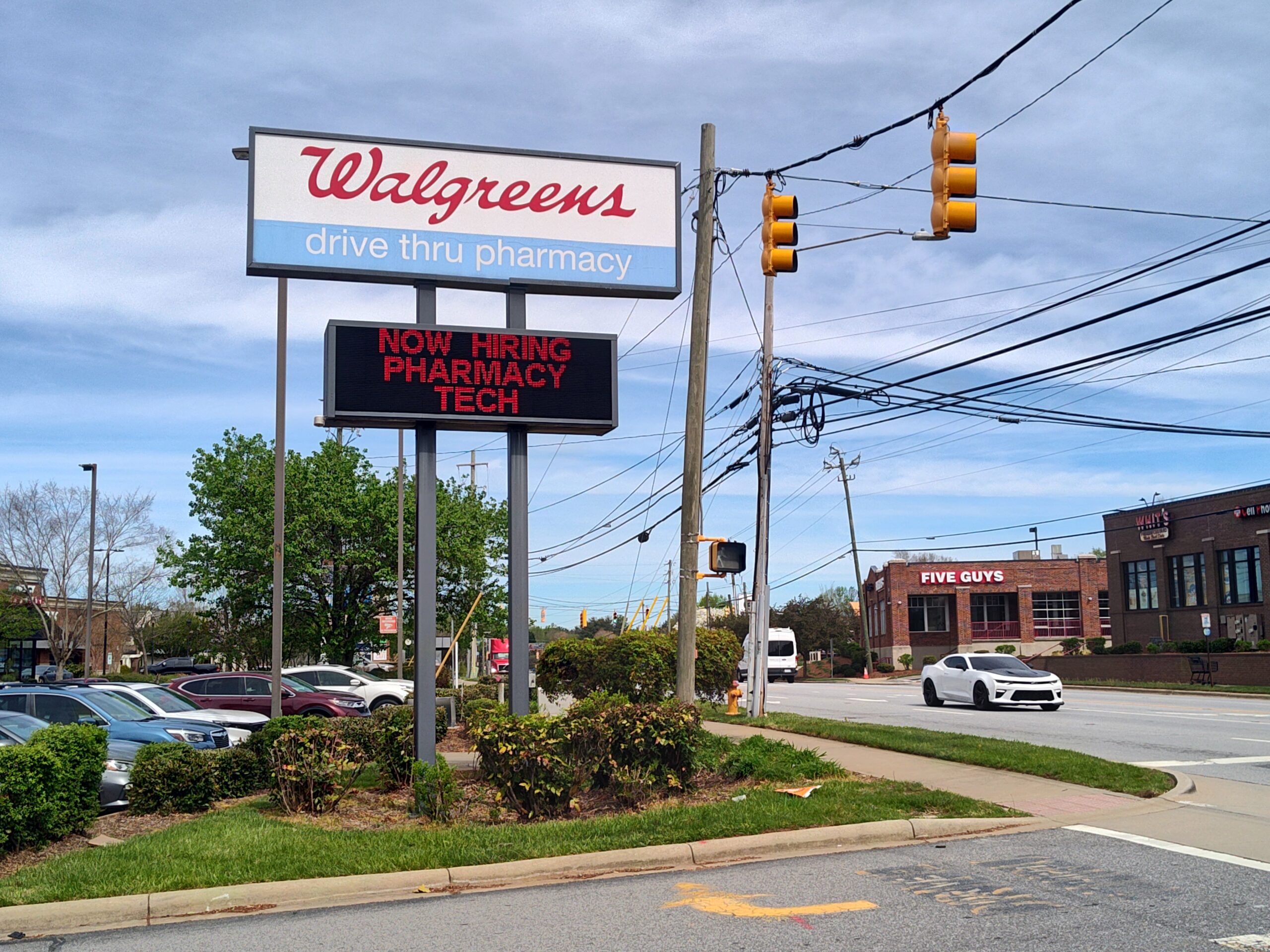
The shortage first appears in hiring signs like this one. Now it is straining home care, transit, and emergency response.
Essential Services Suspended
Asheville’s essential services are losing staff. The result is route cuts, service denials, and outright terminations.
Asheville Rides Transit
In late May 2025, the City of Asheville officially announced temporary service reductions across multiple bus routes (including WE1, N1, N2, W6, and N3) explicitly citing “ongoing staffing shortages.”
Mountain Mobility
Mountain Mobility is hiring drivers at $17.00 an hour in a county where the 2026 living wage is $24.10 an hour. Driver turnover has reached 36.4%, above the county’s 30% target. The shortage shows up in service limits, waitlists, and less room for ordinary trips.
In-Home Aide
The same pattern appears in home care. The county’s own funding and spending records for In-Home Aide show a program that steadily lost the ability to deliver service over time.
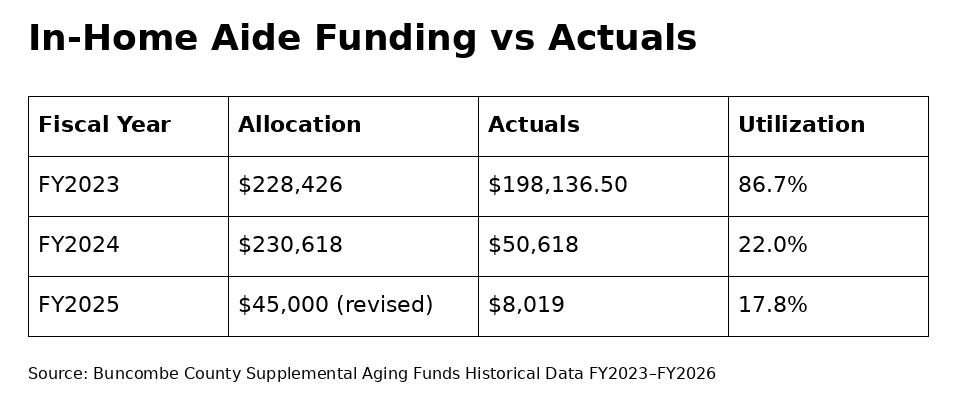
The county has the funding. The workforce is gone.
Exodus of Workers
A city that prices out its working people loses the human infrastructure that keeps old age humane.
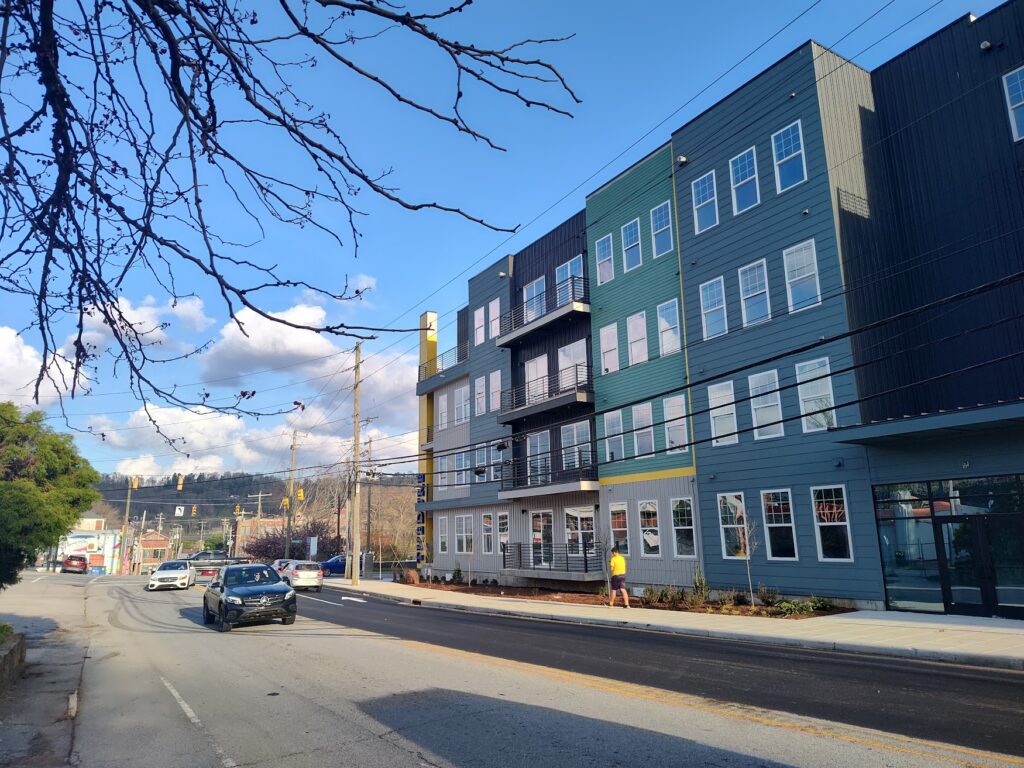
The county’s Missing Middle Housing Study reveals that affordable housing is practically non-existent. To live within city limits, essential workers must surrender a third or more of their income to rent. This cost burden pushes many workers into neighboring counties.
Once displaced, a transit driver or city employee faces a new barrier: the commute. For workers who make $18 to $22 an hour, the commute back into Asheville stops making financial sense. Workers take jobs nearer home, and the city loses the people who keep daily life running.
The Silver Tsunami
As the workforce shrinks, Buncombe County grows older.
Currently, 75,000 residents in Buncombe County are 60 years old or older, nearly 30% of the population. When seniors stop driving, they depend on a support network to remain at home.
They rely on paratransit, home health aides, and visiting nurses for food, healthcare, and human contact. Without the workers who provide those services, seniors become isolated. In Buncombe County, nearly 30% of adults 65 or older live alone.
Being socially disconnected is equivalent to smoking up to 15 cigarettes a day, according to a 2023 advisory from the U.S. Surgeon General. Prolonged isolation increases the risk of premature death by 29%, raises the risk of stroke by 32%, and increases the likelihood of developing dementia by 50%, the CDC reports.
What begins as isolation often ends in emergency response.
Emergencies: The De Facto Safety Net
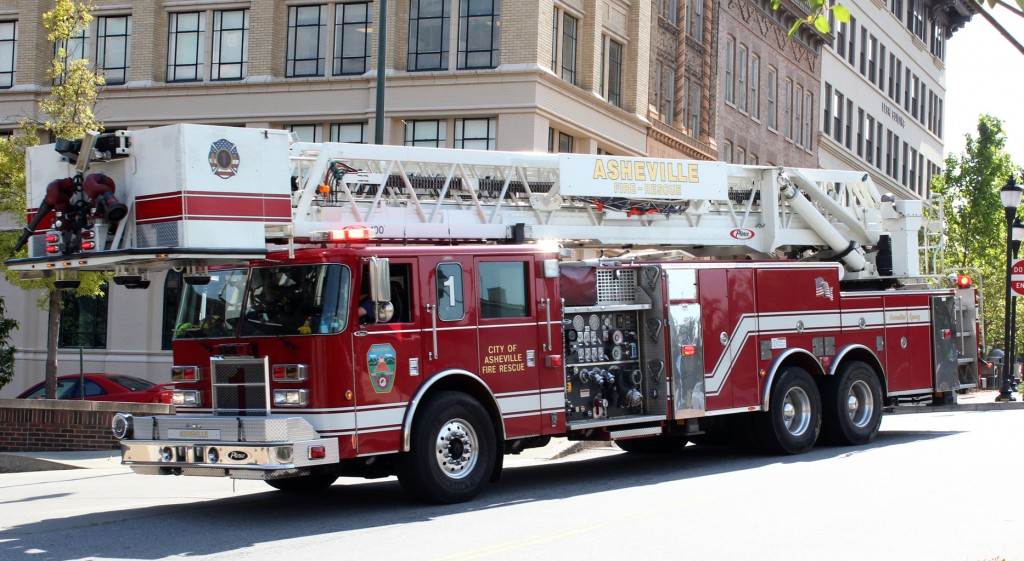
When daily systems fail, emergencies take their place. In Asheville, the housing-driven labor crisis has forced the Asheville Fire Department (AFD) to become the city’s de facto elderly care and medical dispatch service.
To absorb this growing burden, AFD has swelled into the city’s largest municipal department, with a size and call volume that far outpaces peer cities across North Carolina.
- By the Numbers: AFD operates with 304 budgeted positions.
- The Comparison: Despite Asheville’s population of roughly 94,000, its fire department is significantly larger than Concord’s (population 112,000). Furthermore, AFD is more than double the size of fire departments in similarly sized municipalities like Apex and Gastonia.
- The Call Volume: According to the UNC School of Government’s Benchmarking Project, Asheville firefighters respond to roughly 250 incidents per 1,000 residents. For comparison, Gastonia and Concord see about 150 incidents, while Apex sees only 50.
Asheville is not facing more fires. The issue is what firefighters are being sent to do.
Fire stations are spread across the city in a geographic grid, so a fire engine can reach a patient faster than an ambulance can. Firefighters are often dispatched for lift assists and basic care after falls or missed medications. The fire department is filling in for a missing everyday workforce.
A functioning city operates on preventative maintenance (example, a senior takes an ART bus to a routine doctor’s appointment). A degrading city operates entirely on reactive crisis management (example, the senior misses the appointment, falls ill, and requires an expensive emergency EMS and Fire Department response). Costs rise as outcomes decline.
Relational Transportation
Without aides in the home, more seniors will have to seek care in group settings, where one worker can support many people at once.
But group care only works if seniors can reach it. A senior can get a ride to the doctor more easily than a ride to a meal, a program, or another place where daily support happens.
Local nonprofits documented the fallout in Buncombe County’s FY26 Mid-Year Aging Services Summary:
“Because a number of COABC’s clients have transportation barriers, the Resource Coordinators are often the means by which clients receive tangible support.”
– Council on Aging of Buncombe County.
“Progress has been slower than anticipated due to ongoing challenges with Mountain Mobility (MM) route availability.”
– Mountain Aging Partners.
The county’s own report repeatedly identifies transportation as a barrier to basic support for seniors.
The BTT Solution
BTT’s rider log shows the unmet need more clearly: older adults still need rides to family, church, shared meals, and the places where daily support actually happens.
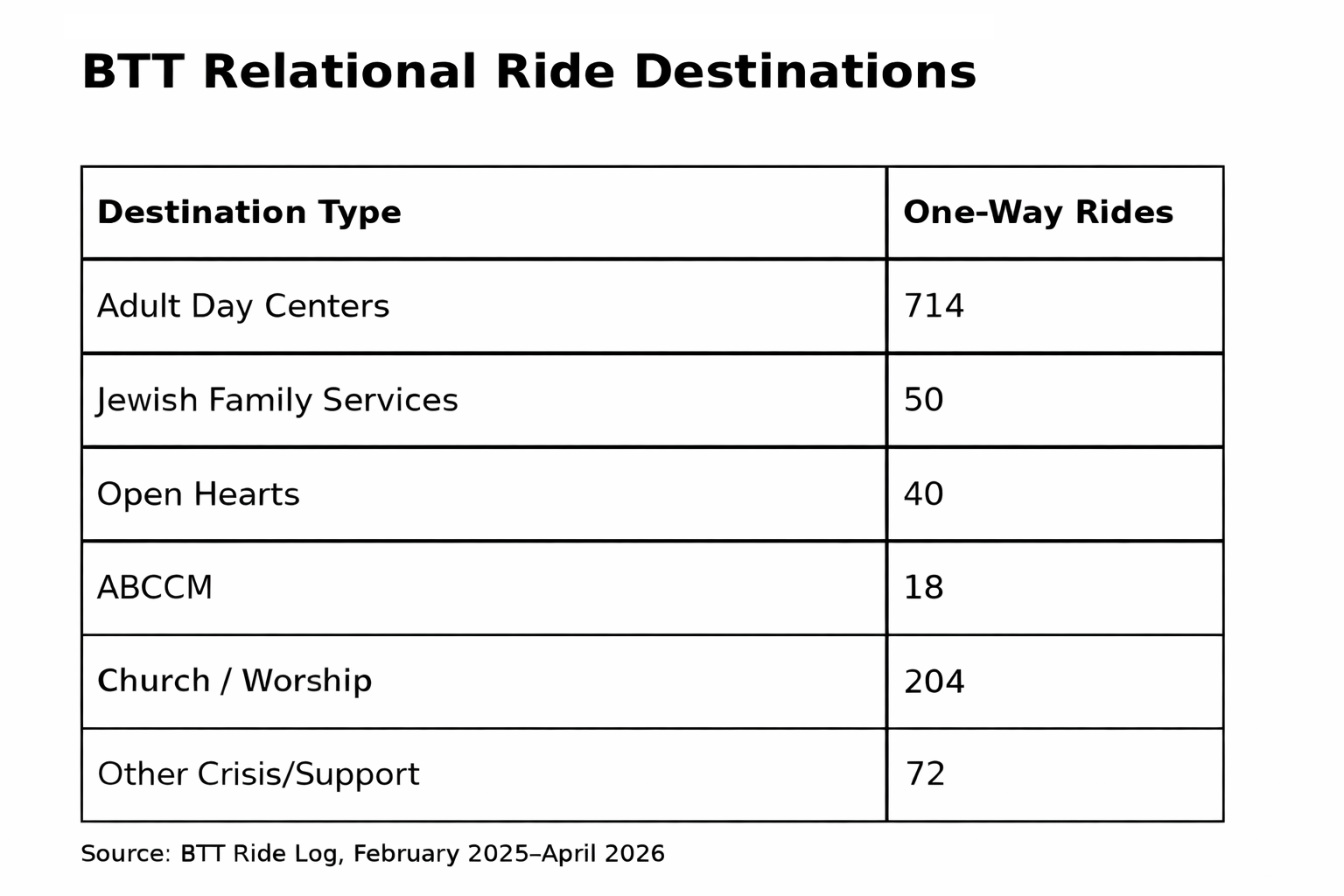
Without transportation, many of those connections are lost.